No questions before the first demo
How AI agents moved the handoff on our engineering team, and why we built Until.

In February, our team was in an awkward spot. Our head of product and I had moved from London to the US, which put eight hours between us and our engineers. At the same time, Opus was changing how much any one of us could get done with AI.
Suddenly the product side of the team could write code too, and that broke a balance that had worked for years. Before, it looked like this:
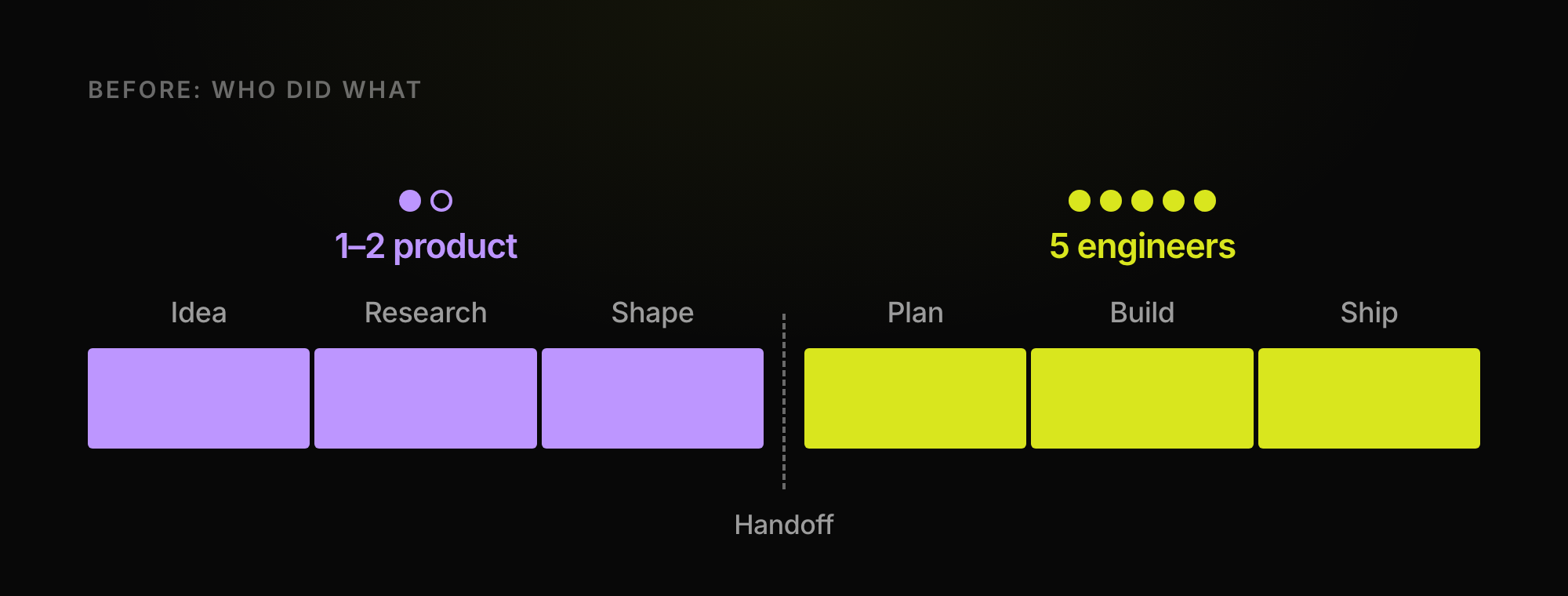
One or two of us in product took an idea, researched it and shaped it in detail. Then we handed it over, and five engineers did the final planning touches, built and shipped it.
With agents, it looked like this:
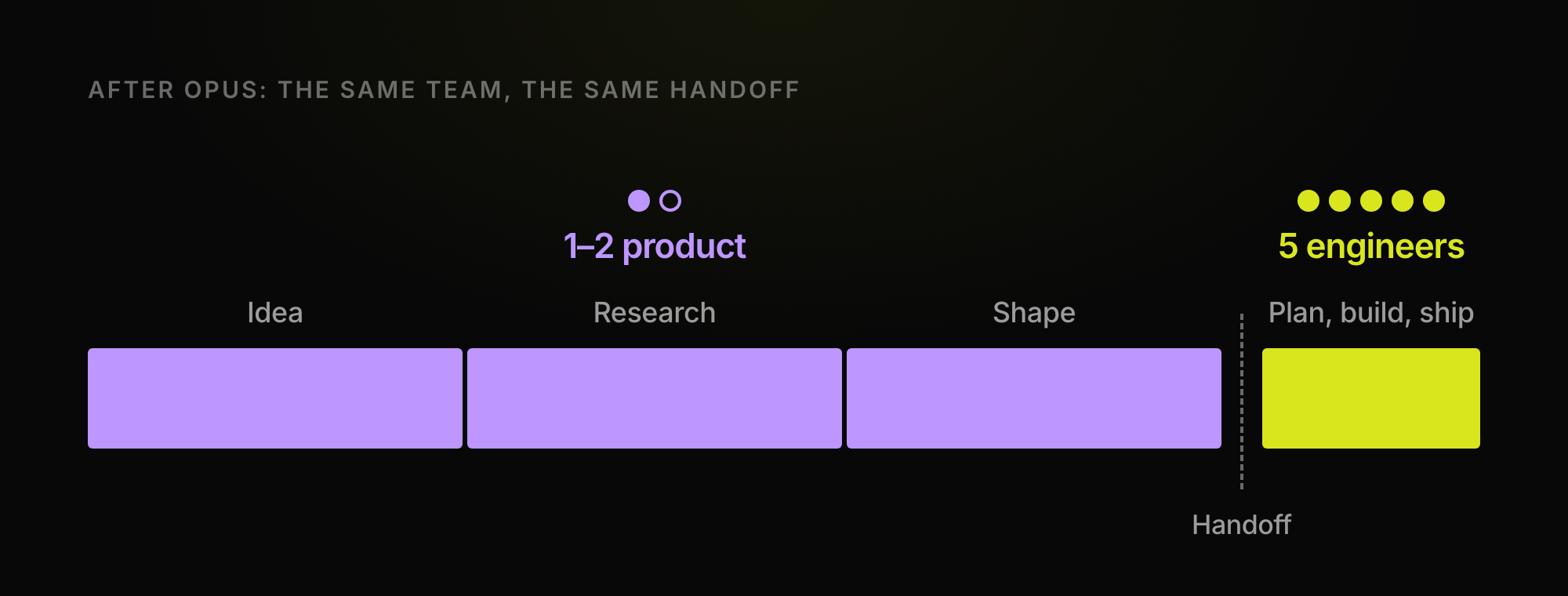
By the time we'd taken a customer's problem, researched the ways to solve it and decided on the shape of the solution, we knew enough to hand it straight to an agent and get a good result in a couple of hours. That was faster than handing it to an engineer, and we could do it at any hour, which mattered with eight hours between us and the team.
Did that mean we didn't need engineers any more? No. But it changed the economics. We couldn't afford a handoff that late in the process.
Moving the handoff
We had two options: rebalance the team, which means cutting engineers, or rebalance the handoffs. We chose the handoffs, and it was the right call.
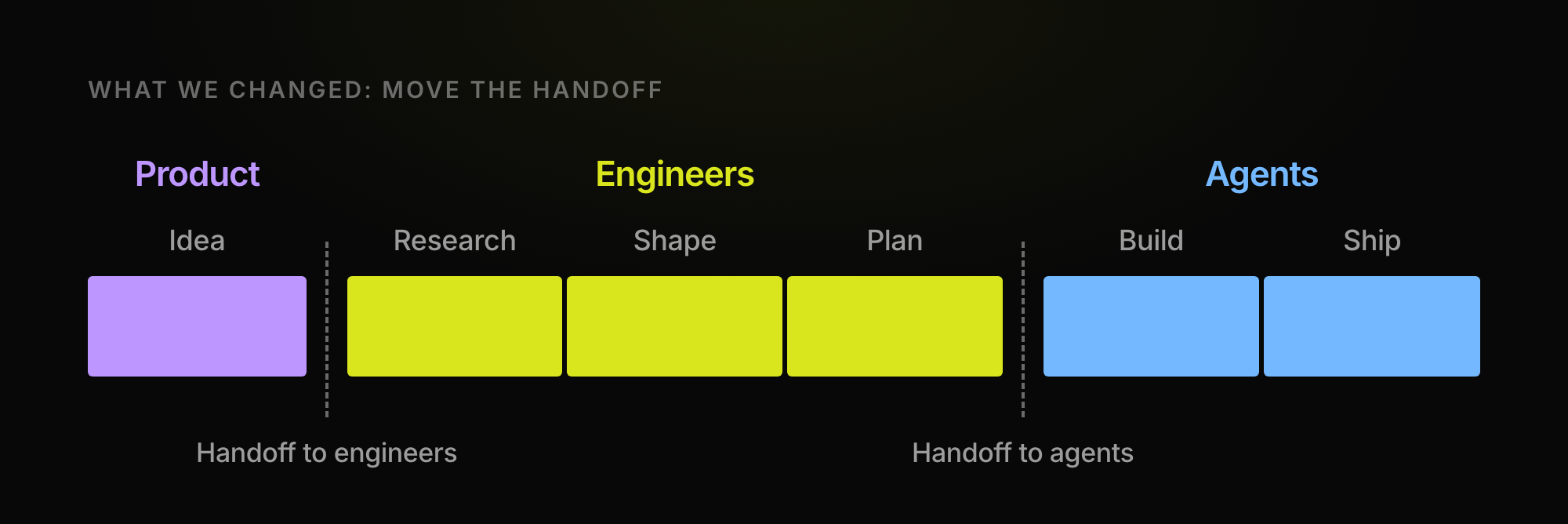
Product now hands over an idea, not a spec. Engineers research, shape and plan the work, then hand the build to an agent. That changed the engineer's job:
- From: detailed specification → high-quality code
- To: ambiguous specification → high-quality code
Engineers became responsible for many of the smaller product decisions that used to be settled long before the work reached them. Two things made that possible.
No questions before the first demo
The first was a rule. When an engineer picks up a piece of work, they can't ask anyone anything until they've produced a demo. After that, they can talk to whoever they like, however they like.
The rule does two things:
- It forces the product team to put what really matters into the handover, because the engineer can't come back and ask.
- It forces the engineer to own the many tradeoffs and "how" decisions the work needs.
The engineer drives, not the product manager, and that made the transition much easier.
The until loop
The second was what we call the until loop.
It matters a lot to us that our engineers still do engineering: that they understand the system we're building, and that they, not the AI, make the important tradeoffs we'll have to support later. It doesn't matter whether they write, or even read, every line of code.
Most of the AI tools we looked at work like a do…while loop. The agent makes all the decisions, and you're left trying to understand them afterwards.
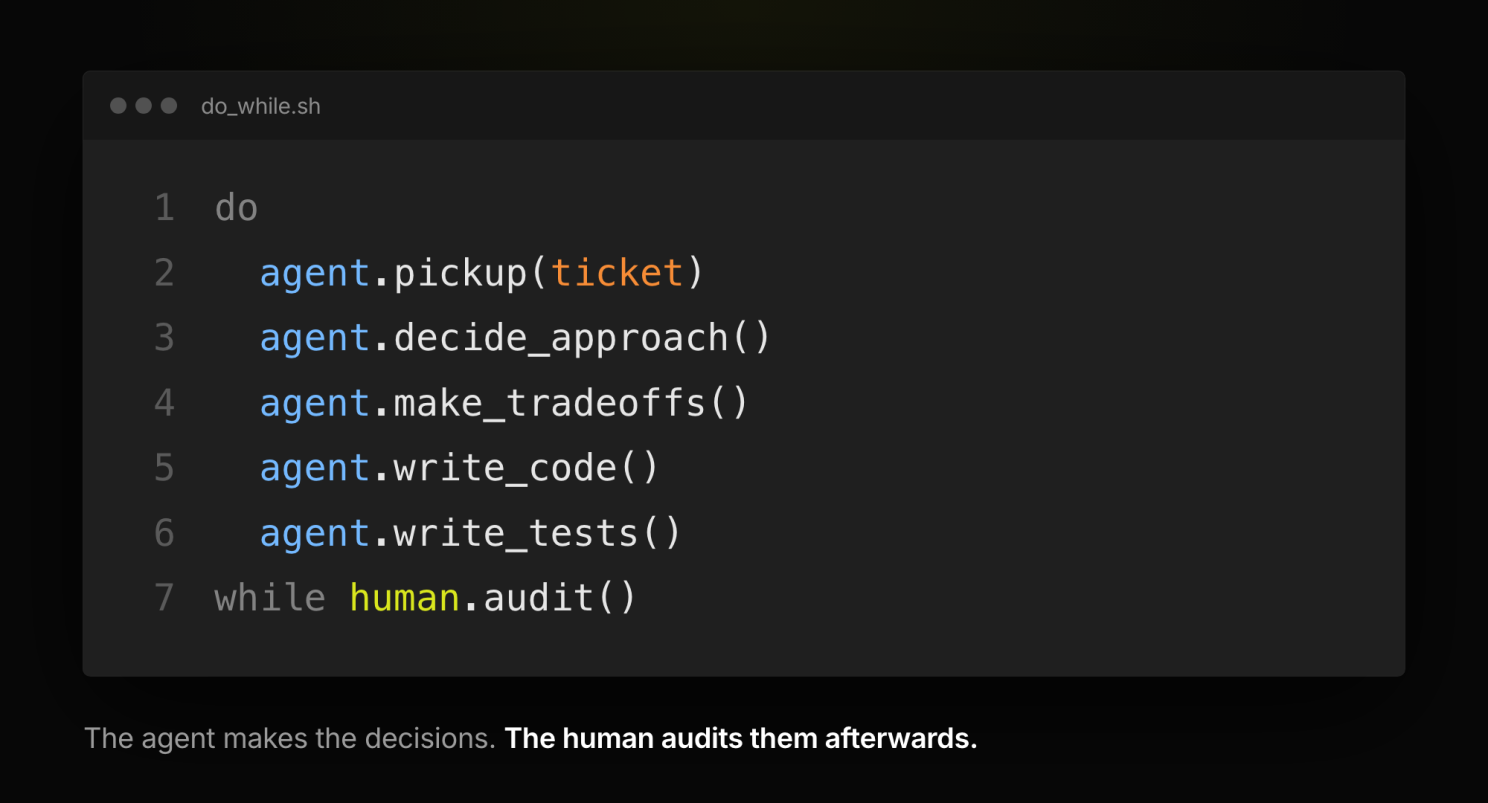
We wanted an until loop instead: the humans make the interesting decisions, and the agent loops until the code matches them.
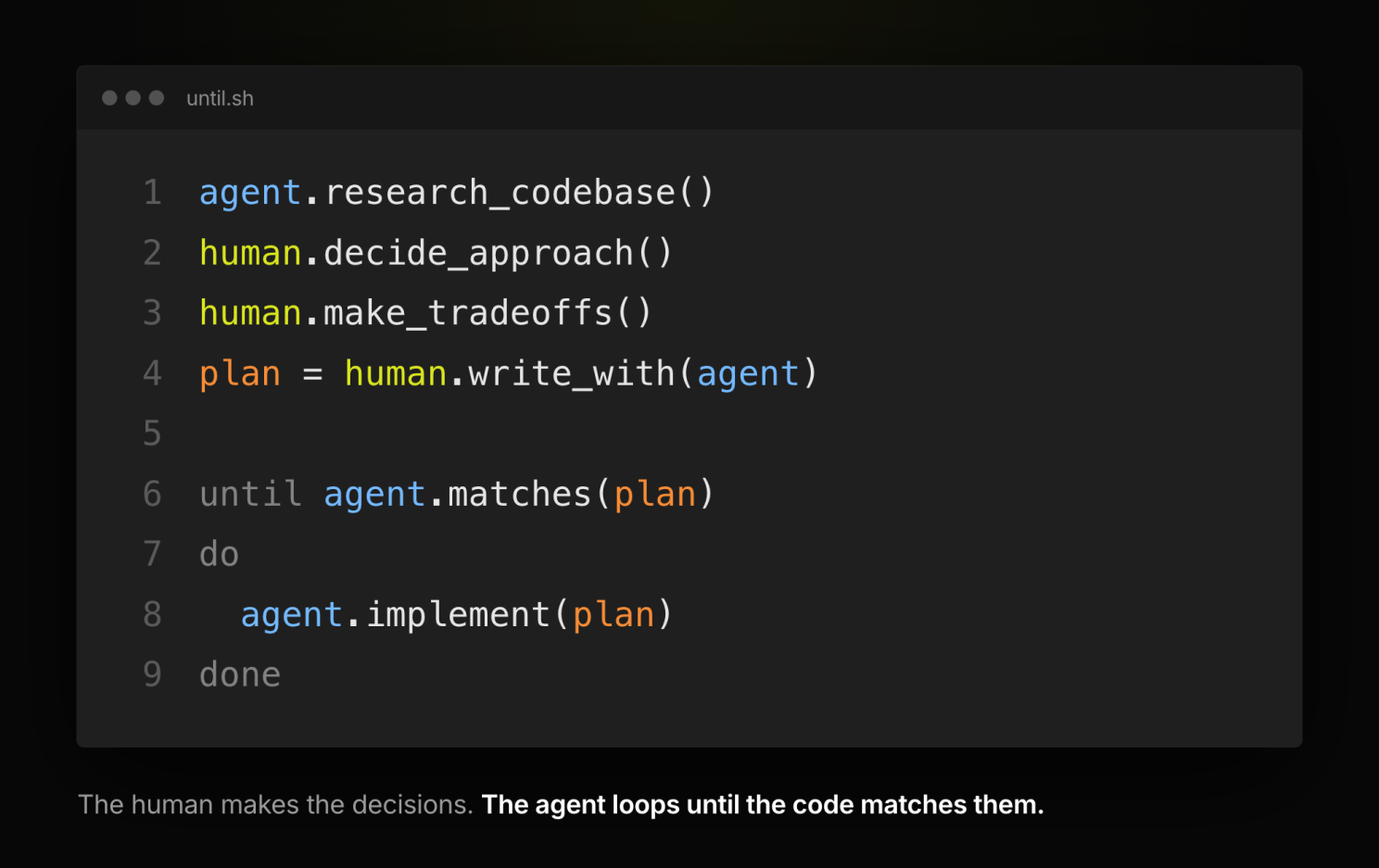
That loop is at the heart of Until, the new product we're building. It puts human decisions and your team's tribal knowledge first, and still lets you move at vibe-coding speed.
We can't wait to show you more. Join the waitlist →
If you want the longer version, I went through all of this in my DevOpsDays talk, Pull requests are dead, long live peer review.
Originally published on LinkedIn